
Add to wishlist
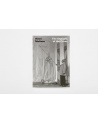
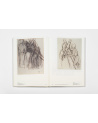
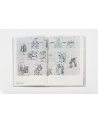
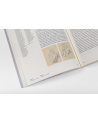
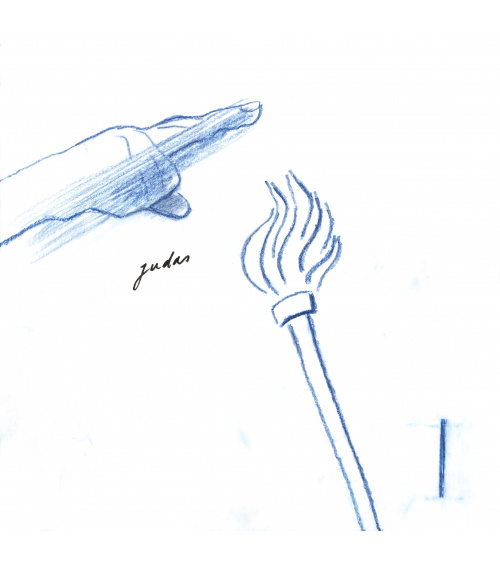
The Way of the Cross designed by Matisse for the Rosary Chapel in Vence is an extraordinary work. Its deliberately rough style, as the artist himself admitted, contrasts not only with the rest of the chapel, which is bathed in light, but also with almost all of Matisse's other works.
Of all his works, Matisse's Way of the Cross is perhaps the most radical and undoubtedly also the most unique, as it is closely linked to the creation of his chapel in Vence, which was inaugurated in 1951.
A sequential composition illustrating a narrative text, its creation was a challenge for the artist, both in terms of its form—which ran counter to his aesthetic principles—and its subject matter. Matisse's lack of familiarity with Christian iconography undoubtedly explains the profusion of sketches and preparatory studies he needed, a quantity never before reached for his other compositions featuring multiple characters. This collection includes original charcoal and pencil drawings, excerpts from sketchbooks and notebooks, prints, and more from the Matisse Museum, the Chapel of Vence, and private collections.
Despite its unique nature, the Way of the Cross remains little known and studied. The exhibition dedicated to it at the Matisse Museum from October 1, 2025, to January 19, 2026, and its catalog examine in detail its genesis and creation.
A catalog that reflects the work: spiritual and daring, revealing universal pain.
Published in co-edition with the Matisse Museum in Nice and the Baltimore Museum of Art.
Fiche technique
Références spécifiques
Henri Matisse est né en 1869 au Cateau-Cambresis. Il est artiste peintre, dessinateur et sculpteur. Il est d’abord formé au dessin textile à l’école Quentin de la Tour, puis il rejoint l’école des Beaux-arts de Paris en 1890, période pendant laquelle il fréquente l’atelier de Gustave Moreau. Il expose pour la première fois au Salon des Cent en 1896 ainsi qu’au Salon de la société nationale des Beaux-Arts. Après le Salon d’automne en 1905 il devient chef du file du fauvisme. Il entreprend de nombreux voyages qui seront pour lui de nombreuses sources d’inspiration l’Algérie, l’Italie, l’Allemagne, le Maroc, les États-Unis et Tahiti. A partir de 1916 il s’installe à Nice où il vivra jusqu’à sa mort en 1954. La lumière et la nature de la Cote d’azure lui inspirent des toiles colorées aux motifs décoratifs puis il se consacre exclusivement aux papiers gouachés découpés qui permettent d’allier peinture et sculpture et dont les Nus Bleus resteront les plus emblématiques.
Vous aimerez aussi