What does Antiquity tell us about our own time? What inspires contemporary artists in it? What fascinates us so deeply? What connection, what dialogue exists between works more than two millennia old and artists of today?
The whole history of art seems to return to this idea — to the contribution of the past to the present. And while the avant-garde artist may, for a time, break codes, reject the hierarchy of genres, and rethink the very notion of the artwork, there always comes a moment when every creator turns to the past in a movement that allows art to establish a relationship with the world. Louise Bourgeois, Jean Arp, Constantin Brancusi, Pablo Picasso, and many others, looked to primitive and ancient arts as if to update or reappropriate them. Since the dawn of humanity, art has thus been a migration of forms — a continuity of artistic gesture that, beyond styles and even techniques, constantly questions what constitutes a work of art.
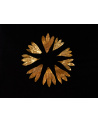
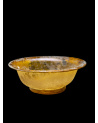
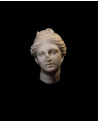
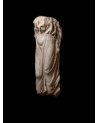
To illustrate this fertile dialogue between past and present, Galerie Arteas and Galerie 8+4 are joining forces for the first time to present more than 80 rare ancient objects, answered by a body of previously unseen works by around ten contemporary artists. Désir d’Antique thus composes a play of resonance — subtle echoes that revive the spirit of Renaissance cabinets of curiosities.
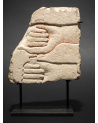
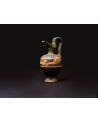
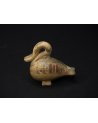
The objects selected by Galerie Arteas, of extreme refinement, speak above all of proximity to the afterlife. Amulets, idols, funerary cones, vases, tools, fibulae, jewelry, and small ornaments — everyday objects that attest to a vision of humanity and of how human beings perceive themselves in the world.
Spanning several civilizations and millennia, the exhibition takes us on a journey through time and space, where the divine stands alongside the ordinary. Ancient Egypt, Greece and Rome, the Near East — our eye recognizes the minimalism of forms or the stylization of these works from various Western and Eastern regions, whose aesthetic and semantic dimensions have inspired modern artists. Indeed, from these objects emerge the same questions that have continually inhabited human beings, past and present alike, in the face of life, death, and time — both present and future.
For contemporary artists, engaging with antiquity is not an expression of nostalgia, but rather a source of inspiration drawn from a repertoire of creations from a time when muses and gods coexisted with humans.
A fragment of Roman marble, a Greek vase, or a funerary object from Egypt’s First Empire expresses the same desire for the absolute that can be found in the creations of Anne and Patrick Poirier, Claire Trotignon, Lionel Sabatté, and Gilles Pourtier.
Anne and Patrick Poirier (born in 1941 and 1942 respectively, live and work in Lourmarin) have, since the early 1970s, pursued a body of work questioning the place of memory in our modern societies. Aware of the fragility of civilizations and cultures, their works often take the form of fragments. Thus Dépôt archéologique, presented in the exhibition, invites each viewer to reinvent an ancient city according to their own imagination.
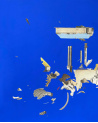
For about fifteen years, Claire Trotignon (born in 1985, lives and works in Saint-Pierre-des-Corps) has developed a precise and poetic practice centered on structures, fragments, and traces. Her works evoke cartography, archaeology, and the memory of territories. For the exhibition, her new collages composed of engraving fragments represent the classical orders of Roman architecture, forming strange landscapes where the past merges with the future.
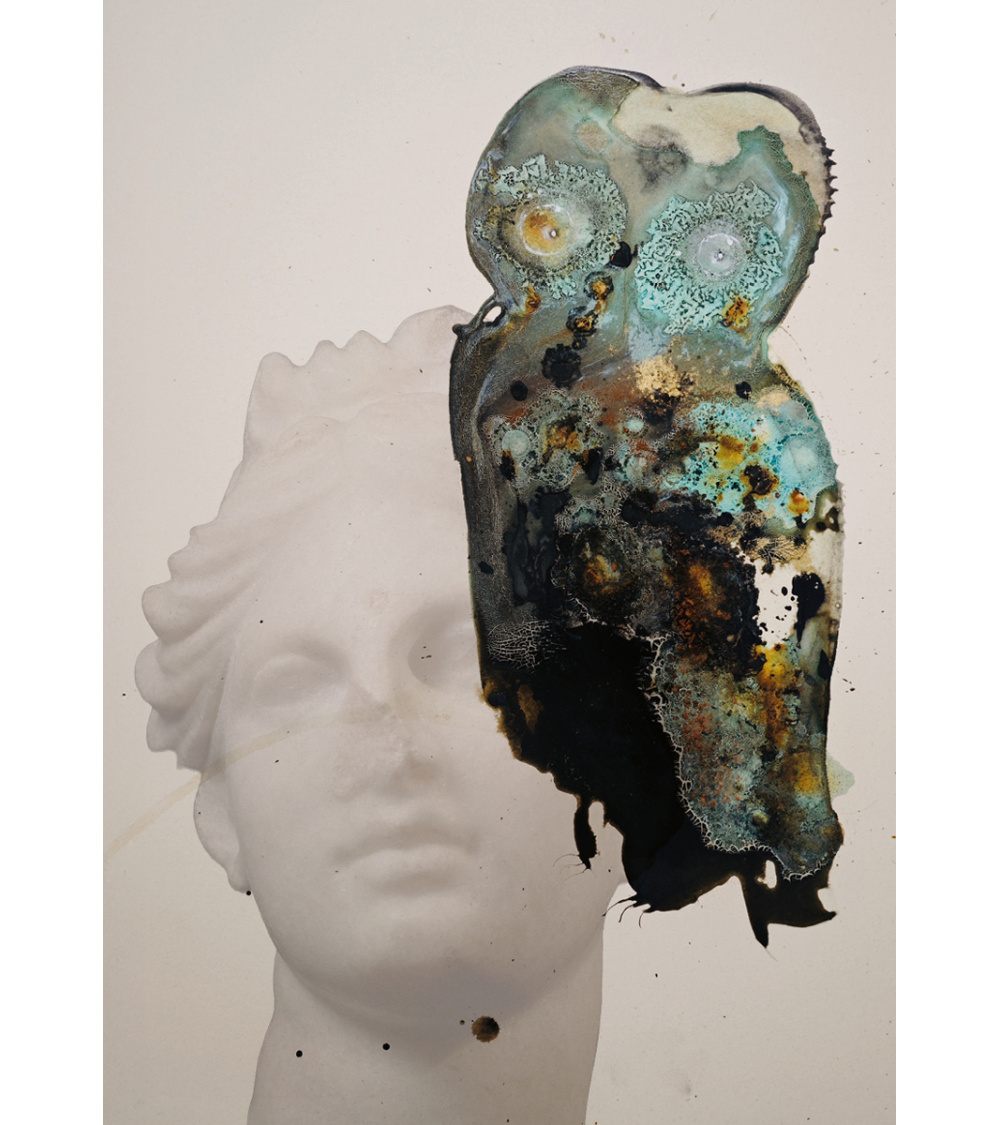
The sphere of the living, as well as the transformations of matter caused by the passage of time, lies at the heart of Lionel Sabatté’s work (born in 1975, lives and works in Noisy-le-Sec). For several years, the artist has undertaken a process of collecting materials that bear the marks of lived experience. Combined in unexpected ways, these elements produce a striking bestiary, such as the Owl of Athena presented in the exhibition.
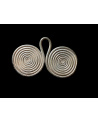
With inventive design, François Azambourg (born in 1963, lives and works in Douarnenez) explores the expressive potential of manufacturing and material-forming processes — whether industrial or artisanal, innovative or traditional — such as the small hammered metal objects he presents, which evoke ancient fibulae.
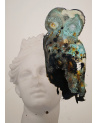
In his Masks series, Gilles Pourtier (born in 1980, lives and works in Marseille) draws from contemporary industrial aesthetics forms that, when transposed into other materials, recover the simplicity of primitive objects.
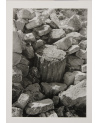
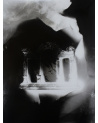
As for the photographs of Bernard Plossu, Françoise Nuñez, Philippe Chancel, and Guénaëlle de Carbonnière, they work with the idea of ruins — not only by immortalizing the cycle of civilizations but also by confronting us with our present reality.
Françoise Nuñez (1957–2021) and Bernard Plossu (born in 1945, lives and works in La Ciotat) occupy a singular place in international photography thanks to their ability to explore the world’s territories on foot. The photographs of ruins in Syria and Egypt presented here blend order and disorder, leading viewers to reconstruct the majesty of these vanished architectures.
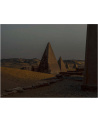
Philippe Chancel (born in 1959, lives and works in Paris), for his part, continues a photographic exploration of sensitive sites around the globe to examine the world and observe the most alarming symptoms of its decline. His series produced in Sudan in 2018 invites us to admire the surprising beauty of the pyramids of Meroë — a site still largely unknown to the public and seemingly haunted by the spirits of the desert.
Guénaëlle de Carbonnière (born in 1986, lives and works in Lyon), whose artistic practice combines photography, engraving, drawing, and installations, particularly questions collective memory through the notions of heritage and archaeology. Through a skillful reversal, with her engraved and inked prints, the artist brings forth the vestiges of millennial civilizations upon the ruins of the present.
Désir d’Antique opens onto irreducible singularities, crossing the time of origins with our modernity — a living transmission for a creation in perpetual motion.