Add to wishlist
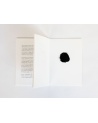
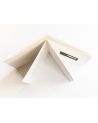
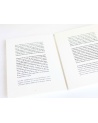
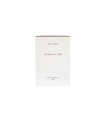
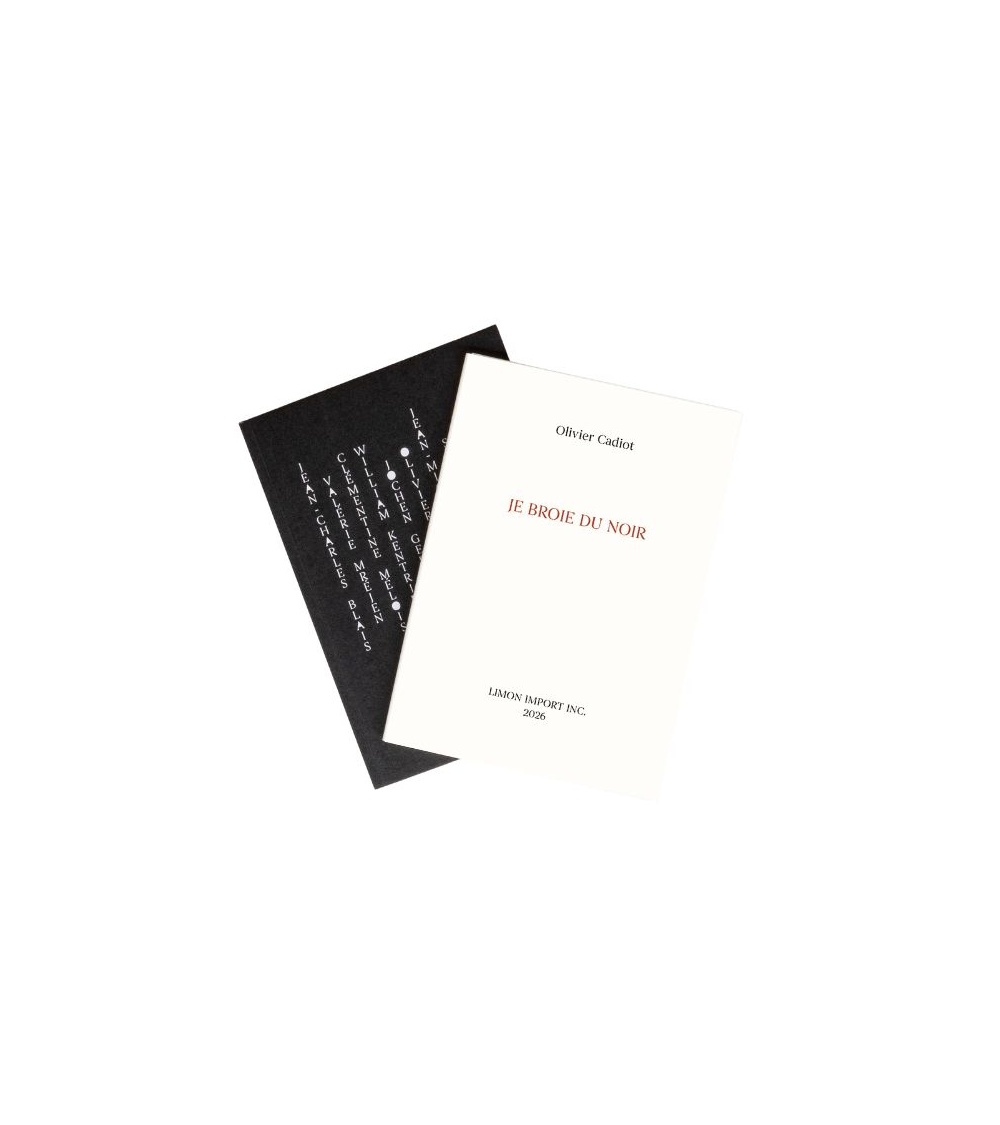
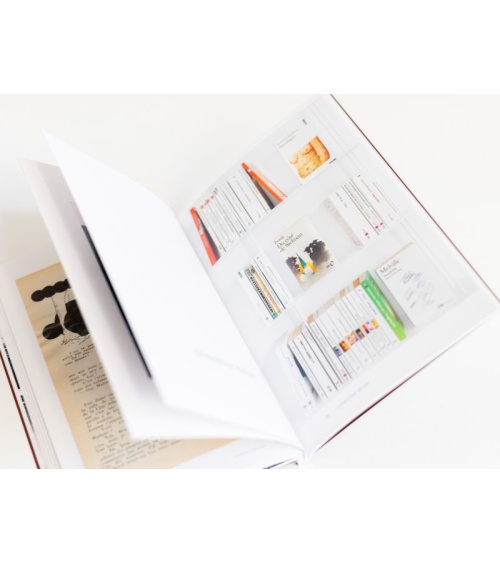
While the book is often the culmination of an artist’s practice, it is less usual for it to become the point of departure for the work itself. Yet that is precisely the case here, where the works of nine visual artists have been brought together to explore the possibilities of layered compositions
There are a thousand ways in which an artist may engage with books—or be seized by them. One thinks first, prosaically, of exhibition catalogues or monographs; then, more aristocratically, of deluxe editions enriched with a print or an original work; and finally of artists’ books, conceived by their makers as artworks inhabiting the shell of a book. Yet in all these cases, the book is an end point.
By contrast, the works brought together here begin with the pre-existing book, which becomes the support for the artwork—a support less innocent than paper or canvas, one that the artist, in a single gesture, both desacralizes and resacralizes. Do we not believe in the virtues of reincarnation?
Indeed, one marvels that there should once again be a thousand ways of proceeding, of which these pages capture only a few reflections. One may cover the book and alter its status, as clothes make the man (Jean-Christophe Norman or Jean-Charles Blais); one may cut into it to invent new forms of illegibility (Jean-Charles Blais or Georgia Russell); illuminate it (Jochen Gerner), détourne it (Valérie Mréjen or Clémentine Mélois), or augment it (Jean-Michel Alberola or William Kentridge). One may even, as in certain recipes, debone and reconstruct it—a process so subtle that one risks not noticing it at all—but let our readers discover for themselves the drawings of Sharka Hyland.
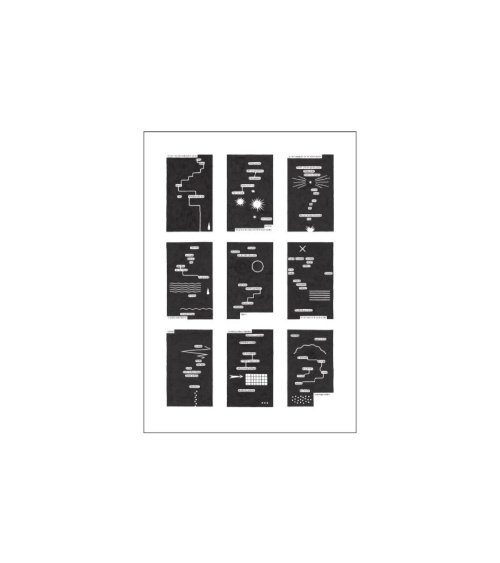
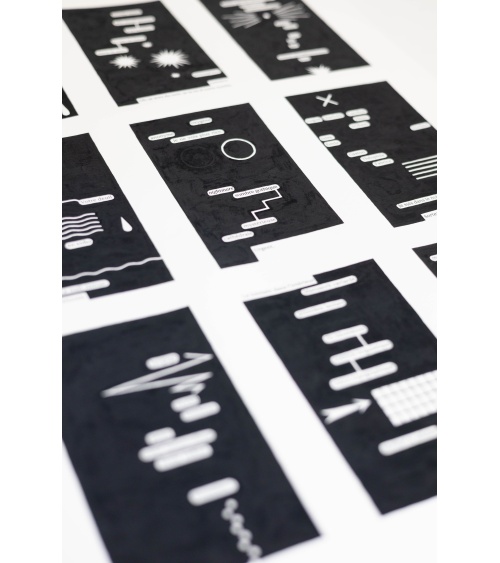
As for writers, they have no choice but to work upon the book itself: the sedimentation of past readings, the necessary erosion of the book in the making, and finally pedogenesis, when time covers the written thing with dust or oblivion. An entire geology, then, which Olivier Cadiot embraces under the eye and brush of Jochen Gerner, who obscures his text beneath an opaque layer of ink, save for a few outcroppings that bear witness to the richness of what lies beneath. For it was written that this very book would itself become contaminated by its subject…
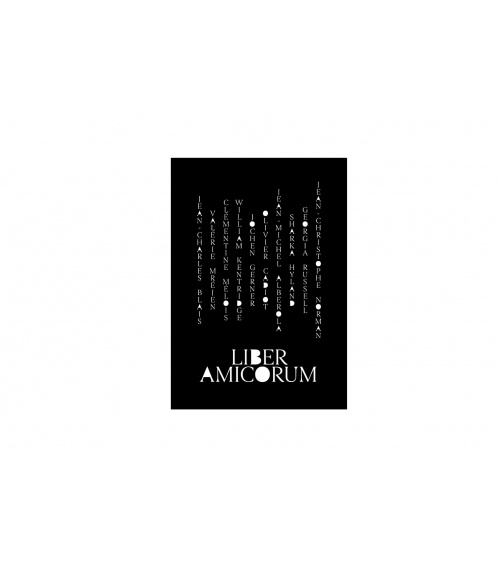
This publication was produced on the occasion of the exhibition Liber Amicorum, held at the Maison des Arts de Bages from 27 June to 3 September 2026.
The publication is co-published with the Maison des Arts de Bages.
Data sheet
Charting a resolutely oblique trajectory between art, literature, and cinema, Valérie Mréjen stands out as one of the most atypical figures on the contemporary art scene. She develops her work based on everyday events, cruel and burlesque details of existence, memories, clichés, and misunderstandings. Her works have been presented in numerous exhibitions in France and abroad.
A writer whose books deal with the contemporary world in its many contradictory dimensions, Emmanuelle Pireyre alternates between publishing books and performing on stage. She was awarded the Prix Médicis in 2012.
Born in 1956 in Boulogne-Billancourt, lives and works in Paris.
A writer, translator and performer, he acts as a true explorer of literary form – often drawing his raw material from it, as in his ever-evolving use of the cut-up technique. An exceptionally perceptive reader may have recognised, in the text produced for this volume – and in turn cut-up’d by Jochen Gerner – excerpts from Walter Benjamin’s Book of Passages.
Born in 1970 in Nancy, lives and works in Montreuil and Burgundy.
Coming from the fringes of the comic strip world – and indeed a man of frontiers himself – he often compiles inventories (real or imagined) – drawings of landscapes, birds, dogs and even, recently, cheeses. As for books, he covers them, expands them, illuminates them – as in these pages featuring text by Olivier Cadiot, where his intervention reveals his interpretation of the text.
You might also like