Add to wishlist
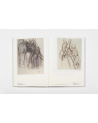
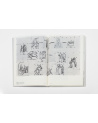
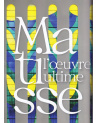
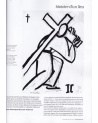
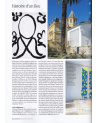
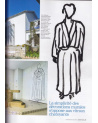
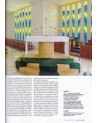
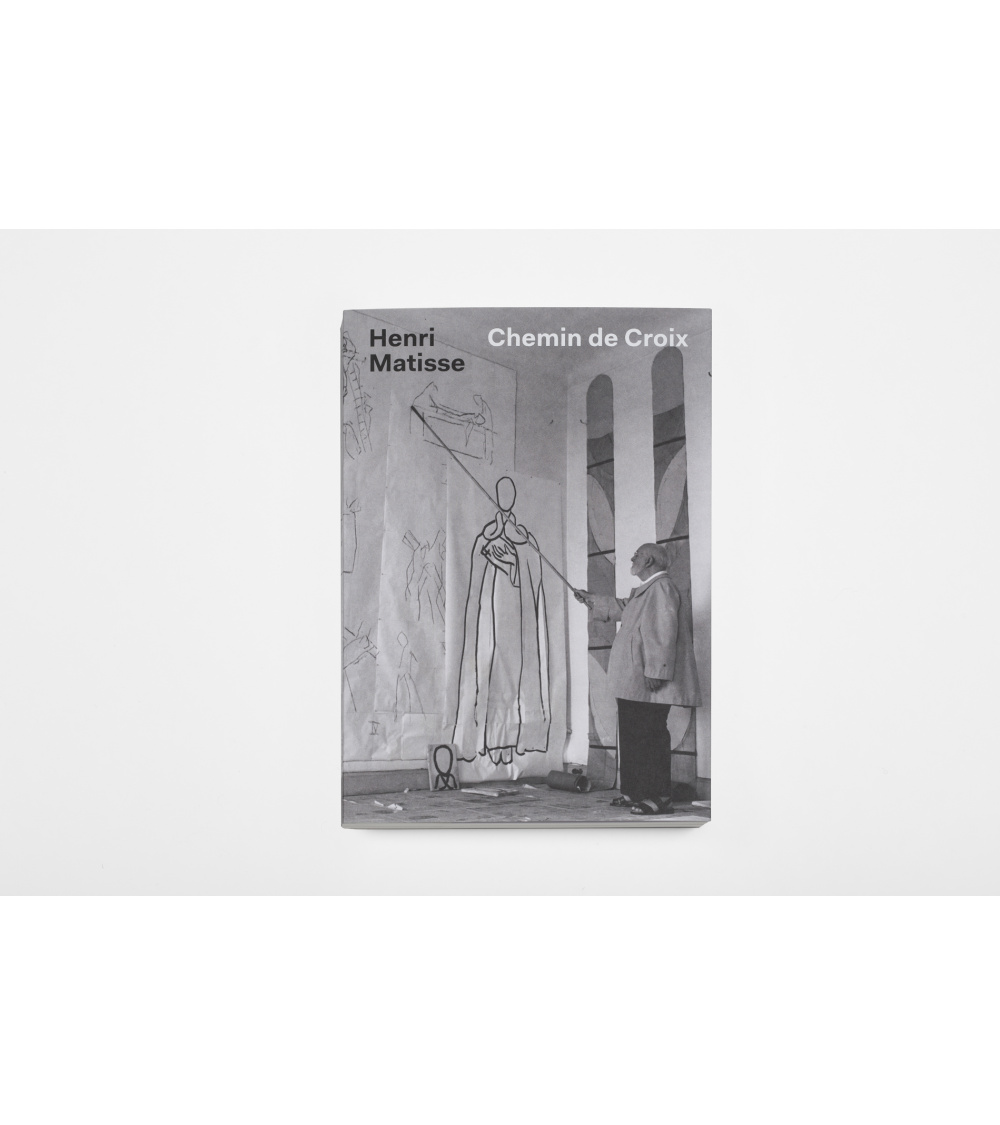
The Way of the Cross designed by Matisse for the Rosary Chapel in Vence is an extraordinary work. Its deliberately rough style, as the artist himself admitted, contrasts not only with the rest of the chapel, which is bathed in light, but also with almost all of Matisse's other works.
Of all his works, Matisse's Way of the Cross is perhaps the most radical and undoubtedly also the most unique, as it is closely linked to the creation of his chapel in Vence, which was inaugurated in 1951.
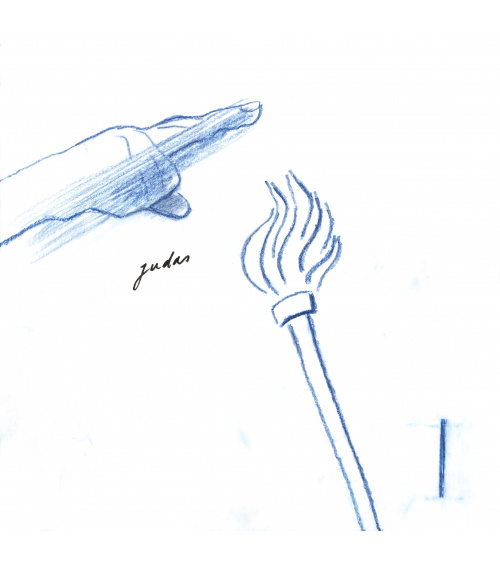
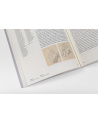
A sequential composition illustrating a narrative text, its creation was a challenge for the artist, both in terms of its form—which ran counter to his aesthetic principles—and its subject matter. Matisse's lack of familiarity with Christian iconography undoubtedly explains the profusion of sketches and preparatory studies he needed, a quantity never before reached for his other compositions featuring multiple characters. This collection includes original charcoal and pencil drawings, excerpts from sketchbooks and notebooks, prints, and more from the Matisse Museum, the Chapel of Vence, and private collections.
Despite its unique nature, the Way of the Cross remains little known and studied. The exhibition dedicated to it at the Matisse Museum from October 1, 2025, to January 19, 2026, and its catalog examine in detail its genesis and creation.
A catalog that reflects the work: spiritual and daring, revealing universal pain.
Published in co-edition with the Matisse Museum in Nice and the Baltimore Museum of Art.
Data sheet
Specific References
Henri Matisse was born December 31, 1869, in Le Cateau in northern France. Over a six-decade career he worked in all media, from painting to sculpture to printmaking. Although his subjects were traditional—nudes, figures in landscapes, portraits, interior views—his revolutionary use of brilliant color and exaggerated form to express emotion made him one of the most influential artists of the 20th century.
In his later career, Matisse received several major commissions, such as a mural for the art gallery of collector Dr. Albert Barnes of Pennsylvania, titled Dance II, in 1931-33. He also drew book illustrations for a series of limited-edition poetry collections.
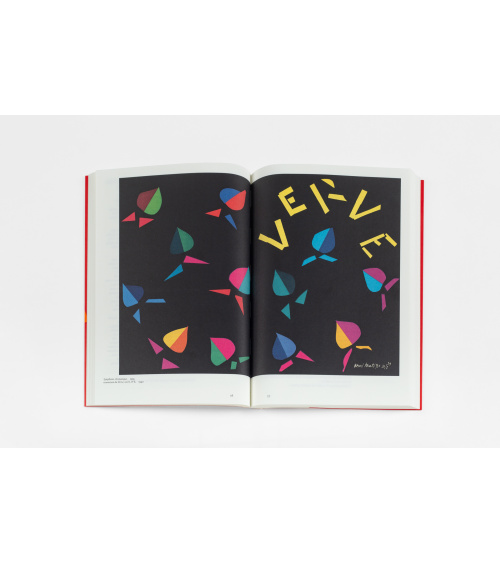
After surgery in 1941, Matisse was often bedridden; however, he continued to work from a bed in his studio. When necessary, he would draw with a pencil or charcoal attached to the end of a long pole that enabled him to reach the paper or canvas. His late work was just as experimental and vibrant as his earlier artistic breakthroughs had been. It included his 1947 book Jazz, which placed his own thoughts on life and art side by side with lively images of colored paper cutouts. This project led him to devising works that were cutouts on their own, most notably several series of expressively shaped human figures cut from bright blue paper and pasted to wall-size background sheets (such as Swimming Pool, 1952).
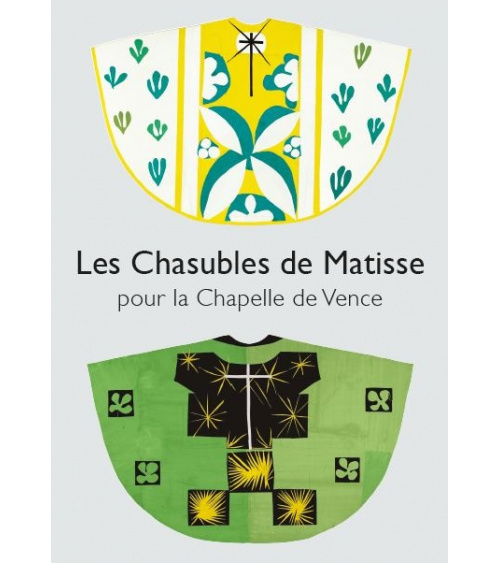
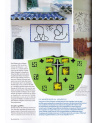
In one of his final projects, Matisse created an entire program of decorations for the Chapel of the Rosary in Vence (1948-51), a town near Nice, designing stained-glass windows, murals, furnishings, and even sacred vestments for the church’s priests.
Matisse died on November 3, 1954, at the age of 84, in Nice. He was buried in nearby Cimiez. He is still regarded as one of the most innovative and influential artists of the 20th century.
You might also like