Add to wishlist
"All we know is that, for a long time now, instinctively, we have both loved each other’s work. ‘Together’, it simply can’t fail!"
— Bernard Plossu
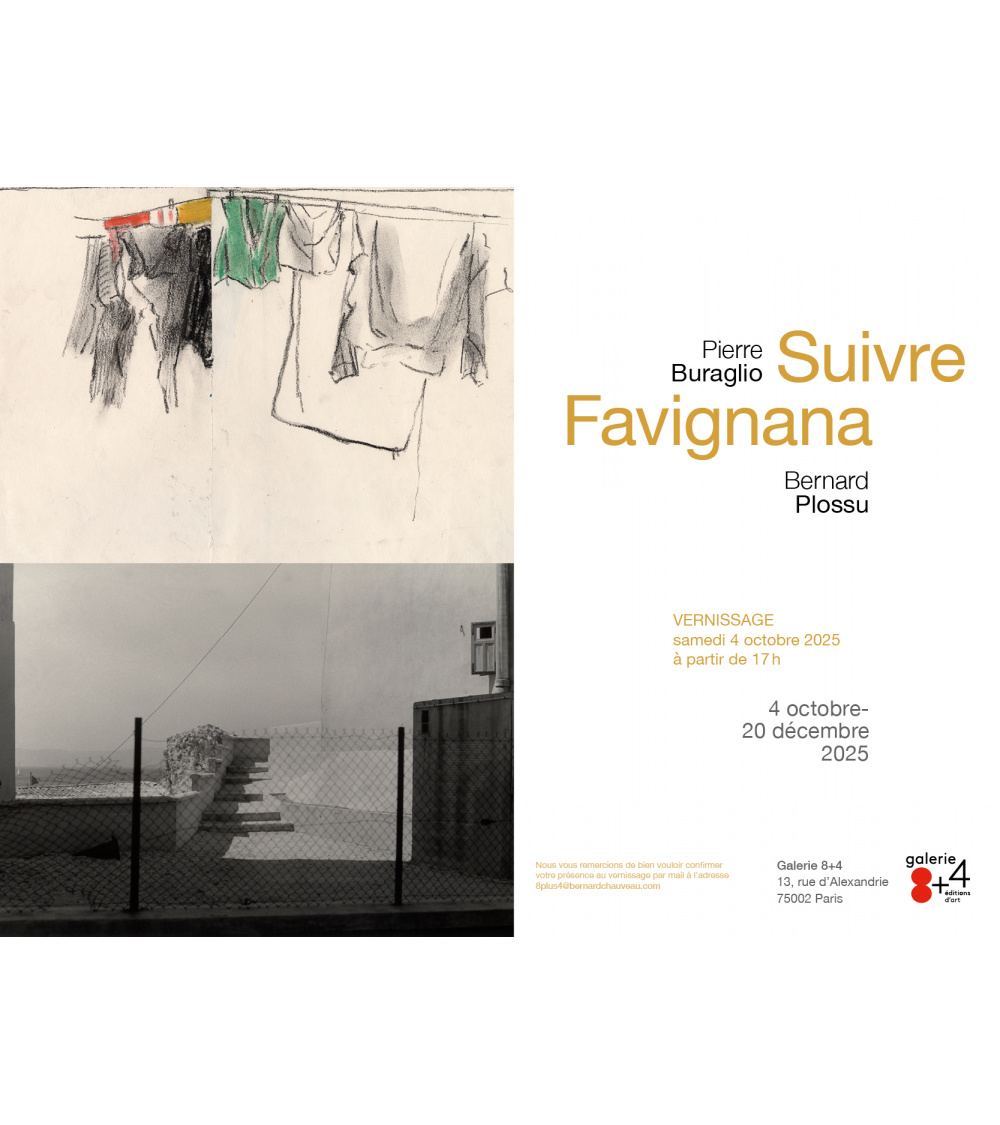
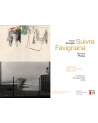
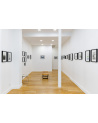
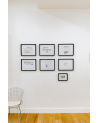
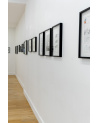
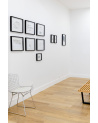
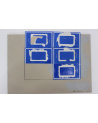
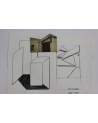
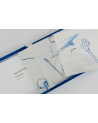
The exhibition Suivre Favignana, presented by Galerie 8+4, finally brings together Bernard Plossu and Pierre Buraglio, who had long hoped to continue within an exhibition space a dialogue imagined many years ago and continually postponed. The exhibition dynamically stages a group of drawings, collages and photographs.
Comprising entirely unpublished works—some created especially for the occasion—the exhibition stands as an ode to the substance of our world: fragments of purified landscapes in both artists’ works, eruptions of vernacular architecture, objects grasped in their most stripped-down forms…
What unfolds here is a conversation left suspended for too long, now suddenly crystallised into joyful back-and-forth exchanges, revealing a friendship forged at a distance through works of art, shared positions and intense discussions during endless encounters. The mutual esteem each holds for the other long remained a matter of circumstance, almost of chance. While Plossu recalls a moment of self-evidence on seeing Buraglio’s drawings at an exhibition at the Musée Réattu in Arles in 1989, Buraglio often cites the Musée du quai Branly as the inaugural moment of their meeting—marked, among other things, by a photographic portrait taken by Plossu on site. Their affinity also wanders when they speak in wonder of their love of Italy, the South, the islands of Favignana and Ponza, and certain forgotten Sicilian villages that they both crossed with the sole intention of stopping time and giving substance to that suspension.
This exhibition was born of the passion they share for a land where the weight of the sun urges sobriety: austerity in Plossu’s compositions, economy of line in Buraglio’s barely sketched landscapes. This southern territory soon revealed itself too narrow for their aspirations, which extend to other places in France, and for Plossu, also to the United States, Mexico and Spain.
Featuring around thirty works by each artist, the exhibition emerges as an exchange between the realms of photography and those of drawing and collage. Buraglio perceives in Plossu’s black-and-white photographs a singularity that runs counter to a colour photography so often verbose and strident. He recognises in Plossu’s work the same humanist concern that he himself has tirelessly pursued, and believes that here lies a relationship to the world that he has long defended—affirming that political commitment begins by capturing the infrathin textures of reality. The exhibition thus stands as a manifesto for what Bernard Plossu calls “discreet abstraction”—an abstraction that rejects the obviousness of formalism in favour of a metaphysics probing territories that open onto the very substance of the world.
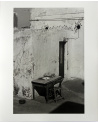
There is no need to summon the human figure here. A section of wall, a cloud, a road sign or a truck, a sparse interior furnished only with two jars, the solitude of a sun-scorched tree—these motifs echo one another to speak to us of a world we no longer know how to see. Our universe is shaped as much by permanence as by transience, and it seems possible, provided we step back, to bind the two together.
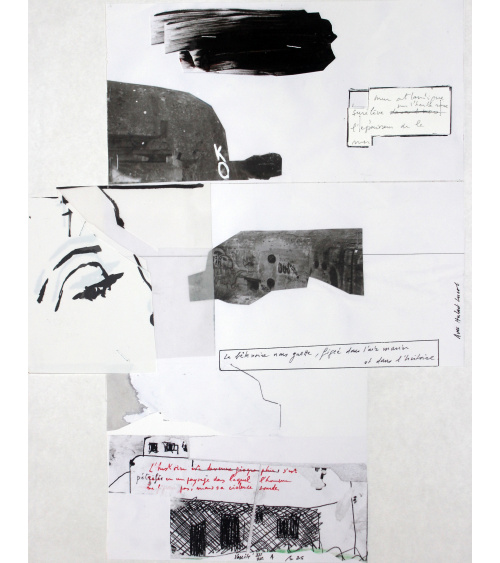
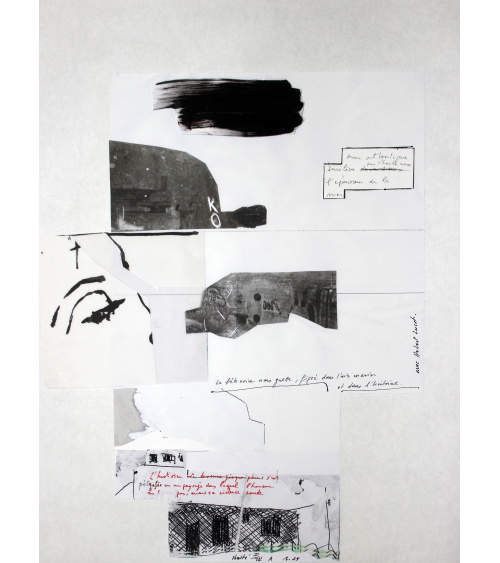
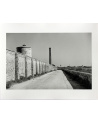
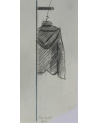
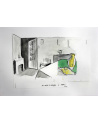
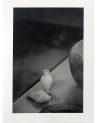
This union takes shape in Buraglio’s work through drawings—some simple sketches, others more detailed and complete: a set of clothes on a rack, a factory chimney, a corner of a wall or an Italian balcony, a hill sheltering a hamlet, a gnarled trunk. To further enhance this perception of the world, Buraglio has conceived an extraordinary series of collages for the occasion. Within a stripped-down logic of montage, he inserts fragments of stolen reality. Plossu responds with a selection of tightly framed black-and-white images. While many play with capturing light and giving it a singular weight, others embark on a wandering gaze toward the most ordinary things, suddenly illuminated by the photographer’s eye.
In his Histoire(s) du cinéma, Jean-Luc Godard once reminded us: “An image is not strong because it is brutal or fantastic, but because the association of ideas is distant and just.” Like Godard, and like Buraglio, Plossu seeks in his compositions to show an eye that listens to time in order to suspend it and place it within the clarity of our gaze.
The exhibition Suivre Favignana is presented in partnership with Ceysson Bénétieres Gallery and Camera Obscura Gallery.
Pierre Buraglio’s Stations of the Cross will be exhibited at the gallery until 20 December 2025.
Born in Vietnam in 1945, Bernard Plossu occupies a unique place in the international photography scene thanks to his ability to explore the world on foot. Considered the leader among traveling photographers, he began his career in 1956 during a trip with his father to the Sahara. This was followed by numerous reports in Mexico, the American West, India, Africa, and Europe.
Immediately recognized for the relevance of his vision, he creates sensual images with motionless and silent vibrations that speak to us of the softness of bodies, matter, surprising configurations of objects, and above all, the obviousness of landscapes that are often desert-like and sometimes abstract. Through an intimate style comparable to poetry, he quickly gained renown, enabling him to exhibit his work in the most important museums in France and Europe from the 1980s onwards. He is recognized as the last of the great French photographers of the 1960s, whose black-and-white and sometimes color images (Fresson process) are now present in several institutions and feature in numerous publications considered to be true artist's books. He has produced more than 400 photography books during his career. For Bernard Chauveau Édition, he completed his tour of the Breton islands, which he began several years ago, searching during long walks for the very essence of these landscapes from which humans seem to be excluded.
You might also like